Guide
How to judge matcha quality: colour, texture and aroma
What to look for before you commit to a bulk order — and why the eye and nose only get you halfway.
By Lucinda · Quality control · July 29, 2026 · 4 min read
Guide
What to look for before you commit to a bulk order — and why the eye and nose only get you halfway.
By Lucinda · Quality control · July 29, 2026 · 4 min read
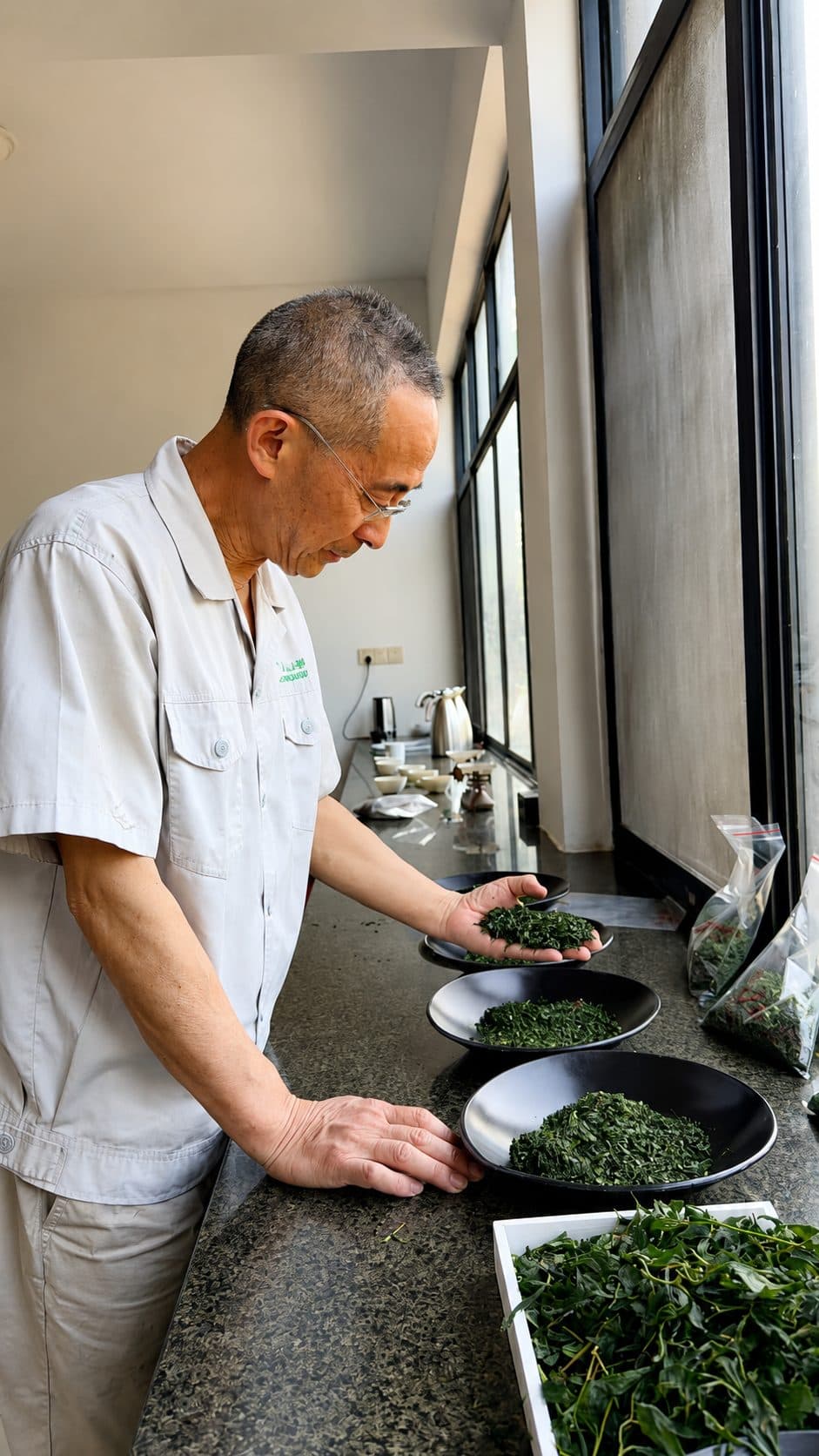
Good matcha reads first in colour: a vivid, almost electric green signals shade-grown, first-harvest leaf. Dull, yellowish or khaki tones point to older leaf, sun exposure or oxidation. But colour, texture and aroma only tell you so much — a Certificate of Analysis confirms the rest.
Vivid, saturated green is the single clearest quality signal. It comes from weeks of shading before harvest, which raises chlorophyll. Yellow-green or brownish hues usually mean lower-grade or older leaf, or oxidation from poor storage. Compare samples side by side in daylight.
Stone-milled matcha is fine and silky, almost like talc; gritty or coarse powder points to faster, cheaper milling. Fresh matcha smells sweet, grassy and marine; a flat, hay-like or dusty smell suggests age or heat damage. Both are quick to check on a sample.
Colour and aroma can be cosmetic. Only a lab panel confirms what you cannot see — pesticide residue, heavy metals, microbiology and radiation. Insist on a Certificate of Analysis per batch, and a supplier who can hold the same spec order after order. That is the difference between a good sample and a reliable supply.
Usually, for drinking grades — it signals shade-growing and fresh, young leaf. But confirm with a taste test and a lab report; colour alone can be manipulated.
Cool, dark and airtight. Matcha is sensitive to light, heat, oxygen and moisture, which fade colour and flavour. Keep it sealed until use and follow the shelf-life on the COA.